
section
Tech
Industry, products, and the wires that hold it all together.
546 stories archived

Accused OpenAI spy had folder called “Saudi Gov Docs,” FBI says
US fears Saudi government will help ex-OpenAI engineer flee spying charges.

Batteries help reduce emissions, but how do we reduce their emissions?
One way to make batteries cleaner is to make fewer of them.

PSA: Patch your Plex media server before someone hacks it
A researcher says attacks chaining 4 vulnerabilities is hacking unpatched boxes.

Startup taps underwater volcano as energy source in "proof point" test
Can undersea geothermal power help Pacific Rim nations cut down on oil imports?
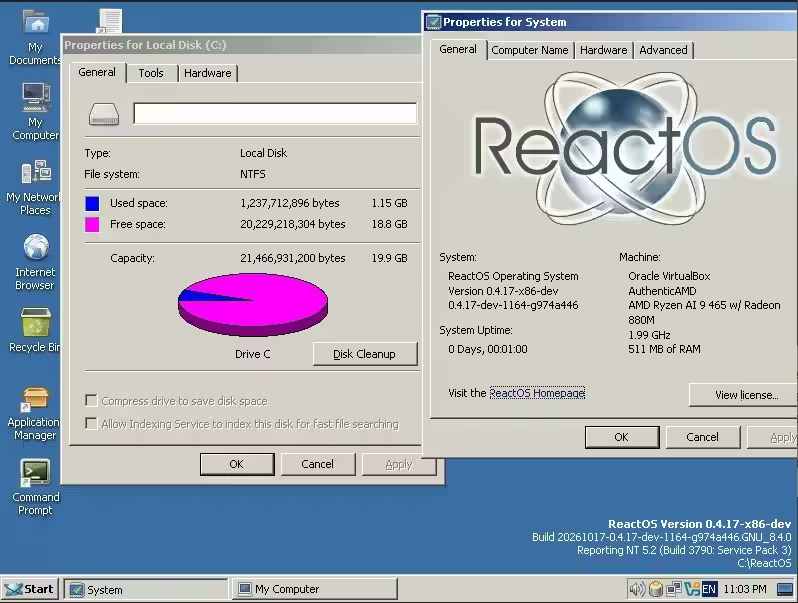
ReactOS reaches major milestone with NTFS install support
ReactOS gains NTFS install support with new driver.

AI game clones are making indie developers afraid to show their work
Delayed Steam Next Fest demo is a sign of a growing problem for indie devs.

Huge DMV data breach impacted current and former Florida residents
Florida issues alerts after statewide DMV data breach linked to ShinyHunters.

Police Say Scammers Used AI to Clone a Sheriff’s Voice
The scammers used the voice of a specific sheriff to impersonate him.

The Staples Gift Card Heist
A gang of hackers targets Staples, but not to buy things from Staples.

Disney found a way to buy Character.AI without buying its lawsuits
Character.AI faces claims its bots encouraged minors to self-harm and kill their parents.

A Chinese rocket deorbited over Minnesota and left this in a farmer's cornfield
All the evidence points to the debris being part of a Chinese Zhuque-2E rocket.

Calls to strengthen workplace privacy in Australia as employers turn to AI to track staff
Monitoring tools common in a range of workplaces, including factories, office jobs, delivery work and in retail – often without employees being informed Get our breaking news email , free app or daily news podcast Employers are increasingly using technology, from CCTV to keystroke monitoring, to track workers’ moves and it is being accelerated by the use of AI, the Human Technology Institute has warned. Examples provided to Guardian Australia by the institute include a fast-food restaurant using surveillance cameras to stop workers using their phones, and AI tracking leading to a cashier warned over making a mistake once every 533 scans. Continue reading...

Review: Lanterns is a truly unique twist on the superhero genre
Gritty HBO series is a beacon for what's possible when one is allowed to get creative with the tropes.

How a Massive Chinese Crime Ring Hacked Staples to Steal Millions
A sophisticated organized crime gang hacked into Staples, issued millions of dollars worth of gift cards, and went on a spending spree across the U.S.
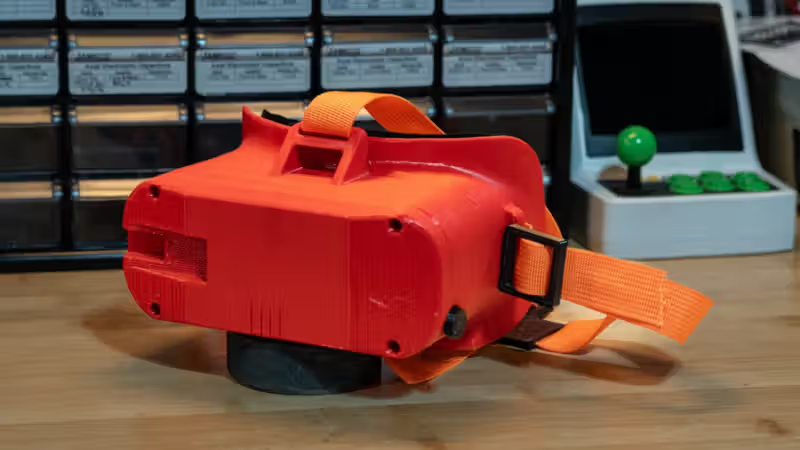
DIY VR: How to build your own headset, and why you probably won't want to
A primer on the joys and pains of building your own head-mounted display.

Stratospheric airship flew from US to Japan to test sky cell tower concept
Tests showed Sceye’s high-flying platform can deliver connectivity in disasters.

The one change that worked: I deleted Instagram – and embraced the joys of a truly private life
I’d become obsessed with appealing to my invisible audience. But since I ditched the app a year ago, my quieter moments have taken on brilliant new meaning I first downloaded Instagram when I was 17 and became hooked on it the way most people fall in love: slowly, and then all at once. For a long time, I never considered myself a social media addict. I self-righteously refused to download TikTok, declared Snapchat to be for “children”, and posted less regularly on Instagram than half of the people I followed. As I went through my university years, however, certain changes crept up on me. I began to swap reading – or essay-writing – for hours spent curating new posts. On my way home from lectures (or later, from my work as a journalist), I would spend ages trying to take the artsiest, most perfect picture of that evening’s sunset for my story – as if the people who followed me were eagerly awaiting yet another photo of one of the Earth’s rotations. What usually followed was a night of reloading my feed to see how many people had reacted to my post – or worse, hadn’t reacted at all. Continue reading...
Anthropic gives outside AI watchdog “employee-like” access
The outside watchdog can publish its findings without Anthropic's approval.

Wikipedia often gets taken for granted – but its history is fascinating, and its future is fragile
Wikipedia’s 68m articles have been consulted trillions of times. Not bad for a website that has barely changed since it was founded 20 years ago A few years ago, I was struck by the tension between how Wikipedia was used, and how it was talked about. Everyone was on it all the time, and yet its reputation had stalled at “don’t trust it”, because it was the “free encyclopedia that anyone can edit”. Clearly people were trusting it, so much so it had become part of the fabric of everyday life since it was founded by Jimmy Wales and Larry Sanger in 2001. But despite the fact it now has been consulted trillions of times by billions of people (English Wikipedia alone is 5.2bn words long), it inspires an odd lack of curiosity. Even people donating to Wikipedia might say the money was “for the factcheckers”, though there aren’t any – not paid ones, anyway. Meanwhile, the internet in the social media era had begun to feel like a much uglier place, and some digital nostalgia was setting in: here was this holdover that had somehow survived; a website that functions – and even looks – much the same as it did 20 years ago. Continue reading...

What are self-replicating ‘AI worms’, and why is Anthropic worried about them?
The tech company says successful AI worms need more capability on less powerful devices, but current trends make that feasible by the end of the year Warnings about what artificial intelligence might do in the future – together with alarming reports of what it has gotten up to already – are being issued so quickly that even security experts have difficulty triaging what to worry about. Yet a report this week from Anthropic’s offensive research team grabbed attention by describing a new, practical threat, one devoid of human characteristics or apocalyptic musings. The red team, as such internal testers are called, said it created a malicious AI program that spread autonomously through internet-connected “smart” televisions and could do the same inside other ordinary devices. While machines running AI usually need a fair amount of computing power, the researchers said that their program split parts of itself among 15 televisions and was still able to function by using a bit of power from each. Continue reading...

The best toys and gifts for eight-year-olds, tested by eight-year-olds
From science kits to karaoke machines, shower sets to brain-boosting games, here are the presents our mini testers loved the most • The best gifts for seven-year-olds Eight is such a wonderful age. Kids are old enough to have their own interests and hobbies, but still young enough to get swept up in play and be absorbed for hours if you find the right toy for them. By eight, children’s interests and skills are taking shape. They’re more confident readers, more strategic thinkers and curious about how things work. And while they think they’re extremely grown up, eight-year-olds still need plenty of time to play for their overall wellbeing. Continue reading...

World Bank says ‘small AI’ could transform developing countries
Bank’s chief knowledge officer says the tech could speed up economic development from centuries to decades The World Bank is urging developing countries to kickstart the creation of “small AI” models, which can run on a mobile phone with low connectivity, to reap the full benefits of artificial intelligence. While Silicon Valley big tech firms are focused on ever more sophisticated consumer products, Paschal Donohoe, the World Bank’s chief knowledge officer, said AI could also accelerate development for emerging economies – but only if it was adapted to local needs. Continue reading...

Why Britain should reject the lure of cheap – and scary – Chinese AI
In the west the technology comes with at least some effort to provide security and a benign intent – not so from China There is much to fear from artificial intelligence developed in China and handed to businesses and governments in the west almost free of charge. Every month Chinese AI developers such as DeepSeek and Xiaomi dispatch the latest versions of their “open-weight” models that allow users to take the core software and use it without paying an expensive ongoing licence. Continue reading...

This Might Be the Earliest Known Spear Murder In Earth’s History
Archaeologists have discovered a puncture wound from a spear in the shoulder blade of a Neanderthal that lived 75,000 years ago, offering a possible glimpse of early interpersonal violence.